Invited Speakers
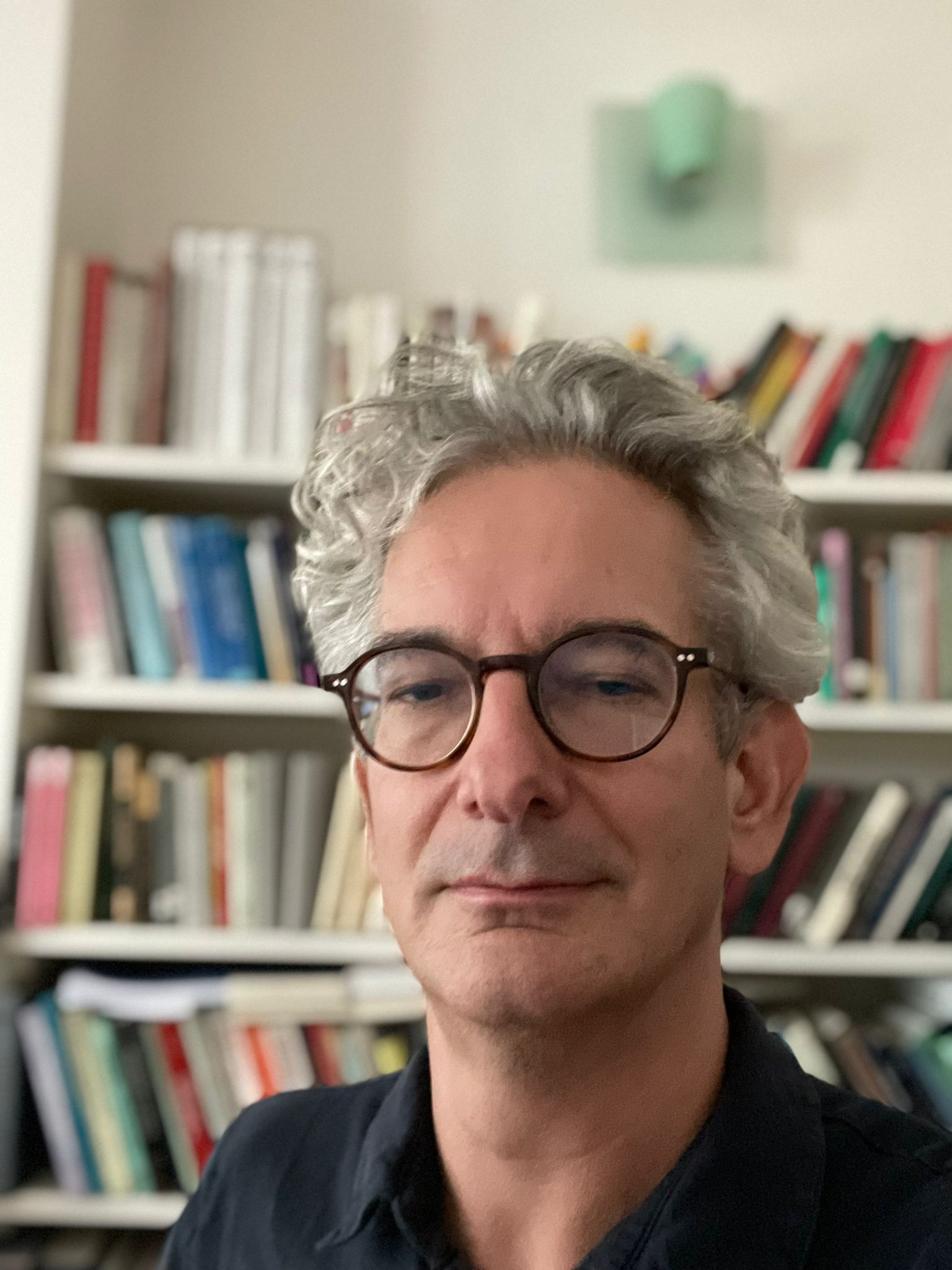
Alexander Clark
Alexander Clark is a Visiting Research Fellow in CLASP (Centre for linguistic theory and studies in probability) at the University of Gothenburg. Before that he taught in the Department of Philosophy at King's College London; and in the Computer Science department of Royal Holloway, University of London. His first degree was in Mathematics from the University of Cambridge, and his Ph.D. is from the University of Sussex. He did postdoctoral research at the University of Geneva. His research is interdisciplinary and lies in the intersection between unsupervised learning in computational linguistics, and theoretical and mathematical linguistics. His most recent book "Empiricism and Language Learnability" with Nick Chater, John Goldsmith and Andy Perfors was published by OUP.
Learnability of Syntactic Structures beyond context-free grammars
A fundamental question in theoretical linguistics is the nature of syntactic structure, and its acquisition. While there is general consensus that hierarchical structure is necessary, there is no such agreement about how to handle dependencies that can be arbitrarily far apart in those structures. Indeed a large fraction of theorizing concerns how to define locality constraints on movement. The well known non context-free properties of languages such as Swiss German, illustrate the issue in its strongest form. While there are many proposals on the table, none of them so far have any associated theory of learning. In this talk, we will look at this question through the lens of learnability; rather than trying to model the phenomena and only then thinking about how it might be learned, we start from learning hierarchical structure and seeing how that can be extended, in a natural way.
Our starting point is an algorithm for learning probabilistic context-free grammars from strings, (joint work with Nathanael Fijalkow). This can then be extended to learning a related class of context-free tree grammars from trees, using exactly the same techniques. We can then combine these two approaches to learn a class of grammars which consist of a tree grammar that generates a subset of the derivation trees of a context-free grammar; this requires overcoming two technical barriers. This results in a formalism that is very close to the Tree-Adjoining Grammar formalism of Joshi, both in the technical details of the formalism, and in the way TAG grammars are written for natural languages. This can learn some non context-free grammars that exhibit the cross-serial dependencies of the Swiss German type, using only strings as input. The resulting model provides some non stipulative locality conditions and makes some significant predictions about the sorts of long distance dependencies that are possible including the adjunct island constraint and successive cyclic movement.
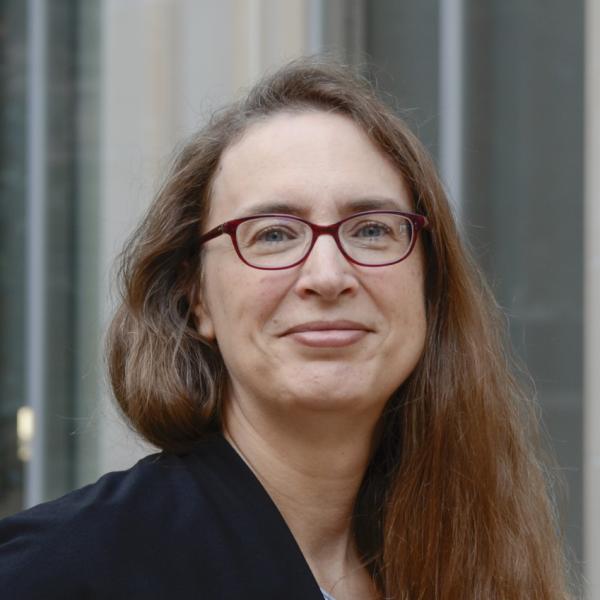
Katrin Erk
Katrin Erk is a professor in the Linguistics and Computer Science departments at the University of Massachusetts Amherst. Her research expertise is in the area of computational linguistics, especially semantics. Her work is on distributed, flexible approaches to describing word meaning, and on integrating them with representations at the sentence or discourse level. At the word level, she studies flexible representations of meaning, and the ways in which they are constrained by context. At the sentence level, she explores frameworks that can draw inferences both based on sentence structure and flexible word meanings. She also studies narrative schemas, the ways in which they influence word meaning, and the inferences that they afford. Katrin Erk completed her dissertation on tree description languages and ellipsis at Saarland University in 2002. After that, she was a postdoc in the computational linguistics department at Saarland University from 2002 to 2006. In 2006, she joined the Linguistics Department at the University of Texas at Austin. In 2025, she moved to the University of Massachusetts Amherst.
Exploring mental and computational representations of word meaning
Mental theories of lexical meaning typically assume that word meanings are concepts, or made from conceptual material, and that there is no hard boundary between meaning that is relevant for language and general conceptual knowledge. We have partial characterizations of these mental representations of meaning, but much still remains to be fleshed out. Here, computational models are interesting as a stepping stone. Language models create internal representations that incorporate observed regularities in language. We can analyze these computational representations to detect observed regularities, and can then ask whether they are also relevant for human meaning representations.
In this talk I will discuss mental meaning representations in Conceptual Semantics, and argue in favor of heterogeneous representations that are part symbolic, part analog, and that involve larger frames. I will introduce a recent extension to the expressivity of Conceptual Semantics to cover material “beyond reality.” I focus on fiction, which we hypothesize to be a simplest case. The second part of the talk is about computational representations. We explore lexical patterns in language models through probes computed from experimental feature datasets. As these probes can only yield binary features, we also elicit componential representations of scenes.

Joakim Nivre
Joakim Nivre is Professor of Computational Linguistics at Uppsala University. He holds a Ph.D. in General Linguistics from the University of Gothenburg and a Ph.D. in Computer Science from Växjö University. His research focuses on data-driven methods for natural language processing, in particular for morphosyntactic and semantic analysis. He is one of the main developers of the transition-based approach to syntactic dependency parsing, described in his 2006 book Inductive Dependency Parsing and implemented in the widely used MaltParser system, and one of the founders of the Universal Dependencies project, which aims to develop cross-linguistically consistent treebank annotation for many languages and currently involves nearly 200 languages and over 700 researchers around the world. He has produced over 300 scientific publications and has over 27,000 citations according to Google Scholar (June, 2025). He is a fellow of the Association for Computational Linguistics and was the president of the association in 2017.
Perspectives on Universal Dependencies
Universal Dependencies (UD) is a project developing cross-linguistically consistent morphosyntactic annotation for many languages, with the goal of supporting multilingual research in natural language processing and linguistics. Since UD was launched in 2014, it has grown into a large community effort involving over 700 researchers around the world, together producing treebanks for over 190 languages. In this talk, I will first give a brief overview of the UD framework and its resources, and then present two ongoing projects related to UD. The first is MultiBLiMP, a massively multilingual benchmark for linguistic evaluation of language models, constructed by leveraging resources from Universal Dependencies and UniMorph. The second is the UD Constructicon project, which aims to develop a construction-oriented version of the UD guidelines and at the same time evaluate the typological validity of the UD framework.